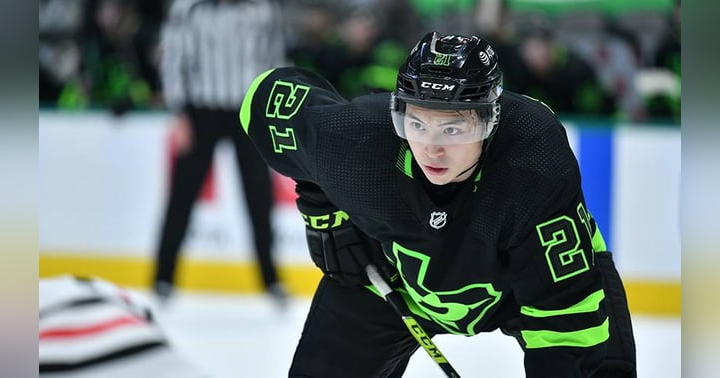
Big Moves, Big Risks: Why the Stars Would Consider This Bold Offseason Plan (If Robertson Is Traded)
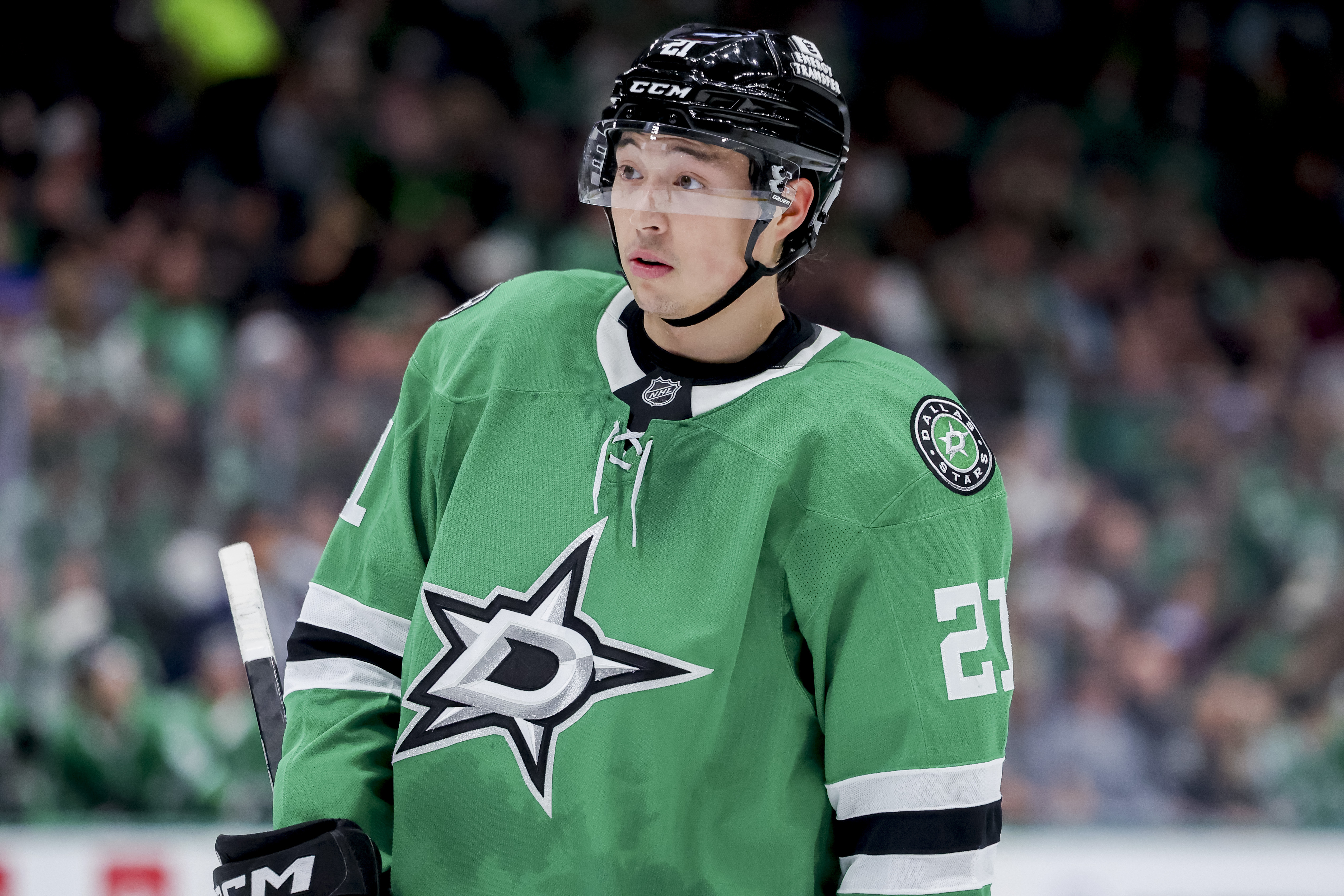
Stars fans — brace yourselves. There’s a bold offseason plan on the table that could completely reshape this team… but it comes with one massive ‘what if.’ The catch? It only happens if Jason Robertson is traded. Yes, you read that right. No one wants to lose an elite scorer in his prime, but if it happens — this is one roadmap that could help turn that painful move into a chance to build a tougher, more balanced, Cup-ready roster. Here’s why this plan actually makes sense — even if it hurts.
Why Would Dallas Even CONSIDER Trading Jason Robertson?
Let’s be clear: Dallas does not HAVE to trade Jason Robertson to stay competitive or manage their cap. If the Stars want to, they can extend both Robertson and Thomas Harley next summer when both are due for raises. It just won’t be easy.
But that’s the rub. Both Harley and Robertson are going to require significant new deals after next season. Harley is becoming a true top-four defenseman with growing power-play impact, and Robertson is already a 40+ goal scorer.
If the Stars keep both, they’ll be locking up a huge portion of the cap in their core, and they’ll have very little flexibility to address other areas of the roster.
Trading one (in this case, Robertson) allows the team to more easily prioritize getting Harley locked up while using the remaining flexibility to address key needs elsewhere; namely defense depth and forward grit.
Again: Dallas doesn’t HAVE to trade Robertson — but doing so could give them a chance to build a more well-rounded team around Heiskanen, Hintz, Johnston, Harley, and Oettinger.
Why Is Dumba Included?
This is a pretty obvious question to answer...
This is not about being "desperate" to trade him, but it is about needing to clear space to do anything meaningful this offseason.
Matt Dumba did not play a single playoff game this spring. That speak volumes about what the coaching staff thought about Dumba's place in the depth chart.
At this point, Dumba’s $3.75M cap hit is a blocker to future moves:
If Dallas wants to do anything, whether it’s this Robertson plan or another smaller-scale set of moves, Dumba needs to be moved or buried.
If they can’t trade him, the fallback options are to send him to the AHL (burying about ~$1.15M of the cap hit), or buy him out.
What would a buyout cost?
Dumba’s buyout would result in ~$1.4M cap hit this year and ~$1.2M cap hit in Year 2 (source: PuckPedia PuckGM)
- This makes absolute zero sense, because they can save ~$1.15 million by burying Matt Dumba in the minors with the Texas Stars. (source: PuckPedia). It still eats dead space and would limit Dallas’s ability to stay flexible next year.
Bottom line: if Dallas wants flexibility, Dumba needs to be traded — whether it’s as part of a big deal (like this one) or not.
Why Target Rasmus Andersson and Blake Coleman?
Rasmus Andersson:
The Stars’ blue line has lacked a true, all-situations RD who complements Heiskanen and strengthens the second pair wherever he plays.
"Overall, Rasmus Andersson functions as a prototypical two-way/puck-moving defenseman: he’s a transition catalyst who can quarterback the power play, defend with awareness, and clear lanes. He isn’t the bruising, physical type, but he brings edge, blocks shots, and isn’t afraid to scrap."
In short, Andersson solves a glaring structural hole in Dallas’s roster. He gives them:
A top-pairing-capable RD
A legitimate 2nd PP quarterback
A steady presence to balance Harley or Heiskanen
Physicality and shot-blocking the team needs for deep playoff runs
Importantly, Andersson wouldn’t have to play on the top pair — and that’s a big part of the appeal.
Dallas could easily roll out a pairing of Lindell–Heiskanen as their top shutdown pair, a duo that has worked well in the past, while pairing Andersson with Harley on a dynamic second pair that can drive offense and transition the puck.
The third pair of Bichsel–Lundkvist or Petrovic provides a strong blend of size, mobility, and grit.
This setup would give Dallas one of its most balanced, versatile blue lines in years — something that’s been missing in recent playoff runs.
At $4.55M through 2025–26, he’s a value piece that helps now and fits the window.
Blake Coleman:
Coleman is not a steal at $4.9M — his cap hit is a little high for a third-liner.
But that’s one of the tradeoffs you accept to get a deal done with Calgary.
What he brings:
2x Stanley Cup Champion
Relentless two-way motor
Playoff-tested grinder
Can chip in 15–20 goals
Native Texan — a bonus, not a driver of the deal, but a fun local connection
Dallas wants to build a third line that can win shifts, tilt the ice, and survive playoff battles — Coleman is exactly the kind of piece who fits that need.
Why Sign Patrick Kane?
This is the one part of the plan that is admittedly a stretch — $2M is a low price for Patrick Kane.
But there’s logic here:
Kane has publicly been linked to Dallas in past rumor cycles.
After missing the playoffs for two straight years, you can bet he is hungry to get back to the postseason — and Dallas is a legitimate contender.
At this stage of his career (late 30s), Kane is likely looking for a good fit, chance to chase another Cup, and a defined role.
Yes, it’s a risk — Kane’s defense is limited and he’s aging.
But he can still score 20+ goals, anchor a second PP unit, and fit in the middle six. If this bet hits, it gives Dallas another proven playoff weapon at a bargain price.
Why Sign Mikael Granlund and Re-Sign Jamie Benn?
The key here is balance, leadership, and cap juggling.
Originally, on my offseason plan, I had Benn signing for $2M and Granlund for $3M. However, I believe Jamie Benn would be willing to take $1M on his next contract, knowing it allows Dallas to give Mikael Granlund $4M — a figure that better reflects his value.
Granlund:
Experienced center/right wing
Excellent passer
Defensive responsibility and veteran presence
Gives Dallas flexible lineup options and solves bottom-six depth
Benn:
Captain
Physical tone-setter
Still valuable on the PP and in late-game situations
Keeping both at a combined $5M is excellent value and ensures leadership continuity; something that will be critical if Robertson leaves.
Why Move Ilya Lyubushkin?
Generally, I liked Lyubushkin’s play this year — he was a solid deadline add and brought needed edge.
But when Heiskanen got healthy, and Dallas shifted back to a 12F/6D setup for the playoffs, Lyubushkin was the one who came out — not Petrovic, not Bichsel.
That signals where the coaching staff sees him in the pecking order.
With Andersson arriving and Lundkvist returning, Dallas simply doesn’t need Lyubushkin’s $3.3M cap hit anymore.
Moving him for a 5th is a good bit of asset management — and clears room for young D like Bichsel to step in.
Conclusion: A Shift in Identity — and a Chance to Win?
Make no mistake — trading Jason Robertson would be one of the most polarizing moves in recent Stars history. The idea of seeing #21 light the lamp for another team is gut-wrenching. But hockey is a business, and this proposed plan shows that there’s a clear path forward if such a move happens. Adding Stanley Cup experience, shoring up the blue line, and creating a deeper, grittier playoff roster could be the ingredients the Stars need to finally break through in the spring. It won’t be easy, and it won’t be universally popular — but it could be the kind of bold swing that wins championships.
How do YOU feel about this potential plan? Would you trade Robertson for this type of roster retool? Sound off in the comments, and share this post with your fellow Stars fans to get the debate going!

Host / Producer / Editor / Super Fan
Ryan, the oldest of the seven Chambers' kids, is the host, producer, and editor of Starcastic Remarks. Ryan has been a life-long Dallas Stars supporter and fan and loves talking, reading, and writing about his favorite team, the Dallas Stars. When he's not inhaling or creating hockey content, Ryan enjoys spending time with his family, reading his Bible, and playing instruments including piano and clarinet. A Dallas, Texas native, Ryan currently lives in Farmersville, Texas with his wife, Amanda, and their three young children where he teaches band for Farmersville ISD. Ryan graduated Cum Laude in May 2015 from Stephen F. Austin State University with a degree in Music Education.
Starcastic Scribbles: Stars Survive Chaos in Winnipeg